Concrete Retaining Walls in Atascocita TX - a wall that holds your yard in place
Soil washing down a slope or an old wall leaning out? We build a poured concrete wall that holds the ground and lets water out.
- Licensed and fully insured.
- Free on-site estimates.
- Replies within 1 business day.
What does a concrete retaining wall do for an Atascocita yard?
T&J Atascocita Concrete Construction builds poured concrete retaining walls in Atascocita and the cities around it. These walls hold back soil where your yard drops from one level to another, so the high side stays put and water drains out from behind instead of piling up.
Most people call us when a slope keeps creeping toward the house, an old timber or block wall is bowing, or they want a level spot for a pool or a concrete patio. The price moves with the wall's height and length, the type of wall the ground calls for, how much drainage goes behind it, whether an old wall has to come out and how easily we can get a crew and a truck to the spot. The schedule turns on settling the design, checking which office covers your address and letting the concrete cure, the wait while it gains strength, before we fill dirt back in behind it. Your written estimate spells out what's in the job and what isn't.
How do you know a slope or an old wall needs work?
Wall leaning at the top
If the top of an old wall has tipped out past the bottom, the soil and water behind it are pushing harder than the wall was built to take. A wall rarely straightens on its own, and the further it leans, the more it costs to take down safely.
Dirt washing onto the patio
Mud fanning across a patio or driveway after a rain means nothing is holding the slope above it, or the wall that was holding it has gaps. Every storm moves more soil and can wash out the ground under the edge of your slab.
Water pooling at the base
A wet face, white staining or a puddle at the foot of a wall usually means water is trapped behind it with no clear way out. That water adds weight against the wall every time it rains, and that's how a sound wall starts to move.
How we build concrete retaining walls
I start with where the wall sits and how water will get out from behind it, because those two decide as much about how the wall holds as the concrete does. I also ask about your watering plans for any beds near it, since extra water behind a wall adds pressure. Then our crew digs the footing down to firm ground and packs the base, sets the forms and the rebar, which is the steel that keeps the wall from bending under the load, and I check all of it before the truck shows up. After the pour we put gravel and a drain pipe behind the wall with somewhere for the water to exit, let the concrete cure and backfill in layers. The footing is buried on day one, so it's the first thing people want to trim to save money, but you can't fix it once it's under dirt and concrete, and that's where I won't cut.
A new wall usually comes with flatwork, the slabs and decks on the ground around it. If the wall levels out the backyard for a pool, we can pour the concrete pool deck on the same plan, and if it cuts out room for a shop or shed, we can handle the concrete floor installation inside.
Low walls for beds and yard steps
These suit a yard that needs a raised bed or a short step between levels. They're the simplest walls we build, but they still get a footing on packed ground and a way for water to get out.
Taller walls holding a grade change
These suit a lot cut for a pool, a driveway or a house pad, where the wall carries real soil weight. They usually call for a reinforced wall on a wide footing, and sometimes a licensed engineer's design.
Walls tied into a patio or deck
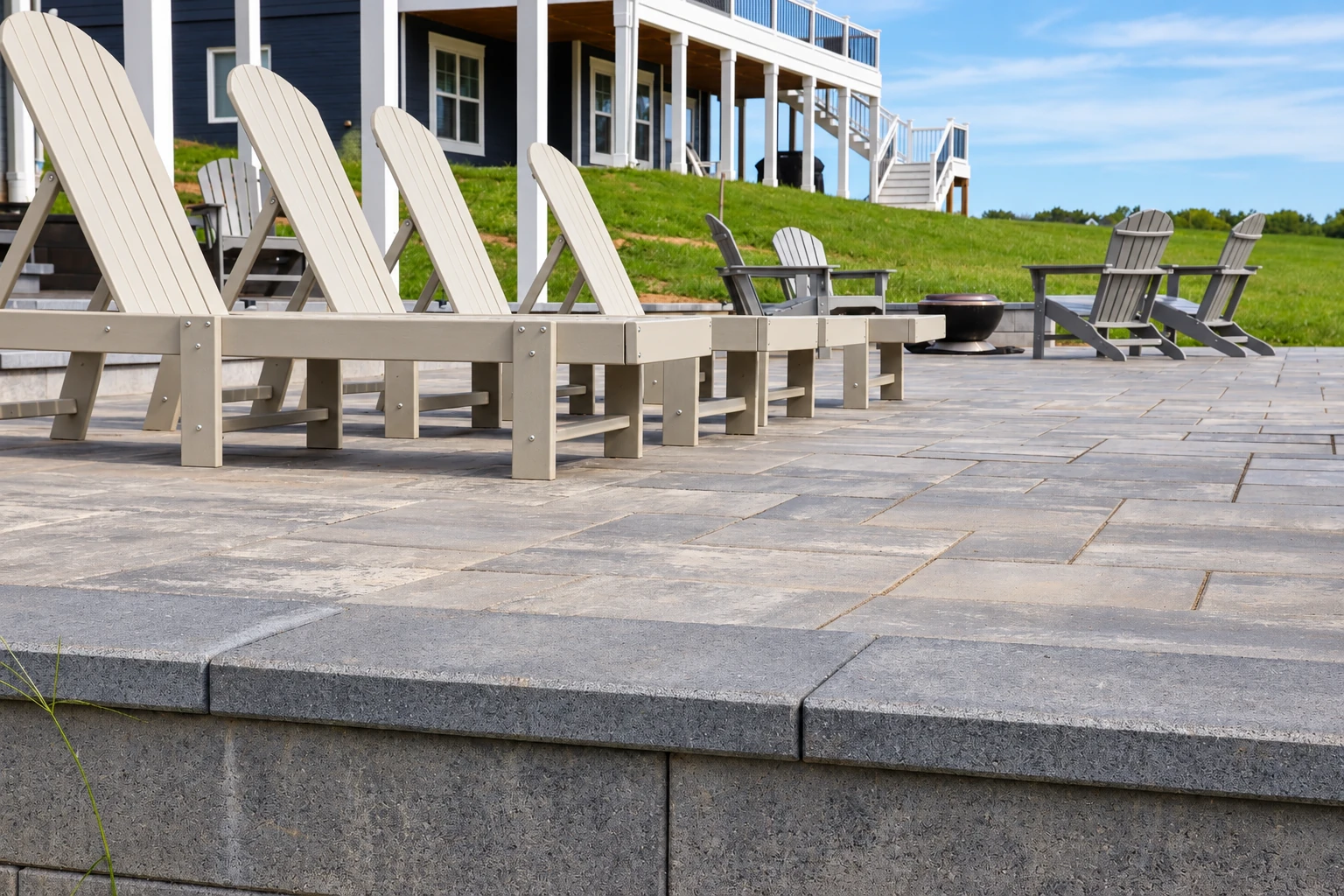
These suit a backyard where the wall edges a raised patio or pool area. We plan the slab's slope and the wall's drain together so rain off the surface doesn't end up behind the wall.
Get a written estimate for your retaining wall
Send the form and we'll get back to you within one business day to set a time. I come out, measure and look at the ground, then you get a free written estimate with no pressure to book.
(713) 325-6337- Based in
- Humble, TX 77346
- Hours
- Mon–Fri: 7 AM–10 PM, Sat–Sun: 8 AM–9 PM
What happens when you call about a retaining wall in Atascocita?
Here's how a retaining wall job runs from your first call to the final walk-through, and who you'll deal with at each step.
Call or send the form
Call (713) 325-6337 or use the form, and we'll set up a time to see the spot. Tell us roughly where the wall would go and how big the drop is.
I measure and check the ground
I measure, look at the soil and where the water runs, and check which office covers your address. You get a written estimate that spells out what's included and what isn't, so you can compare it with any other quote line by line.
We dig, form and set steel
Our crew digs and packs the base and sets the forms and steel, and I check all of it before we pour. That check comes before the truck arrives because once concrete is in the forms, nobody can fix what's under it.
Walk the finished wall together
Once the concrete has cured, we backfill behind the drain and walk the finished wall with you. You'll see where the drain lets out and where we planned the joints.
Why Atascocita homeowners call T&J for retaining walls
I measure and run the job
I come out to look at the ground and take the measurements, and I'm on site running the crew and checking the forms and steel before we pour. The person who priced your wall is the one making sure it's built that way.
In Atascocita since 2023
I started this business in Atascocita in 2023 after years as the right hand to another contractor around here, running the crew and checking grades and forms. Catching a mistake before the truck shows up is the habit I built this company on.
Licensed and fully insured, every job
Digging a footing next to fences, foundations and a neighbor's line carries real risk, and being licensed and fully insured means that risk isn't left on you. It's the first thing to check on any contractor you're comparing.
If your yard needs holding back, tell us about the wall or call (713) 325-6337 and I'll come out to look at the ground.
Retaining walls, drainage and permits around Atascocita
Which office handles a permit depends on your address, because some lots around Atascocita fall under Harris County and some under a city. On county lots, the Harris County Permits Division issues permits for building and property construction, and the county's floodplain rules set the type of permit by flood zone. On land in the floodplain, those rules count grading, excavation and fence-type walls as development, while routine repairs to existing structures fall outside that. When a licensed engineer designs a wall, the Texas engineering board says the final drawings should carry the engineer's seal, signature and date, and you can contact the board to ask whether a complaint has been filed against that engineer. We check which office covers your lot before we plan the wall, and we help with the paperwork when it's needed.
Most retaining wall calls we get start with a change someone made to the yard, like a pool, a raised patio or a new pad, and then the new grade needs holding and the rain needs somewhere to go. We plan the wall and its drain outlet together, and we do the same work on jobs in Humble and Baytown.
Questions about concrete retaining walls in Atascocita
How much does a concrete retaining wall cost in Atascocita, TX?
An installed poured concrete retaining wall in the Houston area usually costs about $15 to $35 per square foot. Height, length, the footing, drainage and access move a job within that range, and one Houston price page leaves out removing an old wall, curved walls, walls over 3 feet and yards with challenging soil, so ask what each quote covers. Ours comes in writing with what's included and what isn't spelled out.
How do I choose between a gravity and a cantilever retaining wall?
A cantilever wall uses much less concrete than a solid gravity wall, but it needs more design work and more careful building, so you're trading concrete against design. A gravity wall holds soil back by its own weight and the weight of the soil it retains, while a cantilever wall ties a reinforced wall to a footing and lets the soil resting on the footing's back edge do most of the holding. Highway guidance from Wisconsin, a different region, says cantilever walls suit firm ground and may need piles, which are deep support posts, where settling is a problem, and piles raise the cost a lot. I'll tell you which type fits once I've seen your ground.
Why does drainage behind a retaining wall matter?
Water trapped behind a wall adds pressure on top of the soil's weight, and that extra push is a common reason walls lean. Texas highway design guidance calls for extra drainage wherever landscaping near a wall will get heavy watering, so that pressure doesn't build up.
Is it bad to build a retaining wall on a slope?
It can be, because a slope in front of a wall weakens the soil's resistance at its base, and Texas highway guidance says to keep walls off slopes when possible. Where a wall sits on the lot changes its chance of failing, so placement is worth settling before anyone talks about height or finish.
What causes a concrete retaining wall to lean or crack?
Usually it's pressure the wall wasn't built for, such as water trapped behind it, soft ground under the footing or clay that swells. In swelling clay, a wall takes on extra stress as the soil gets wetter, and how much depends on how much moisture rises and how tightly the wall hems the soil in. Concrete also cracks a little on its own, so we cut control joints, straight grooves that give it a planned place to crack.
Can I put a retaining wall right on my property line?
It can work, because some cantilever walls use a footing that extends to one side only, which helps where a regular footing would reach across the line. Have your survey handy for the estimate visit so we know exactly where the line runs.
Related concrete work around a new wall
Concrete pool decks
When a wall levels out the backyard, a poured pool deck gives you a flat surface around the water that's sloped to shed rain away from the house.
Concrete floor installation
A wall cut into a slope often makes room for a shop or shed, and that space needs a level interior floor poured on a packed base.
Cities where we build retaining walls
T&J Atascocita Concrete Construction is based in Atascocita, TX, and we build retaining walls across the cities around it, including Humble and Spring. Twelve cities have their own page below, and if you don't see yours, call and ask.
Humble, TX
Get your retaining wall planned right
Have the wall's rough length and height, a few yard photos and your planting plans ready, plus your flood zone if you know it, and the first visit can go straight to the details.